

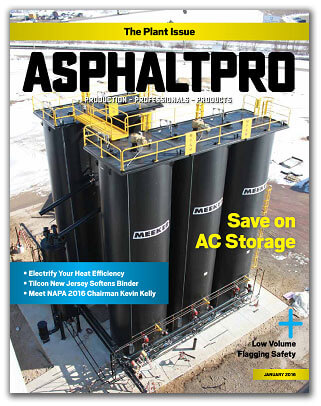
Electrify Your Plant’s Heat Efficiency: PHCo’s Research-Based Article Is Featured In The January Issue Of AsphaltPRO
With the costs of doing business on the rise and energy in flux, an asphalt producer should consider any measure he can take to improve the bottom line. The method and efficiency of a plant's heat – for asphalt and hot oil – are areas that often are overlooked. But energy costs contribute significantly to the operating costs of an HMA plant, and fuel choices can impact producers in more ways than just cost.
Operators often choose a method of heat based on current energy prices, but the cost of natural gas, LP gas, fuel oils and electricity have all fluctuated over the years. Just seven years ago, electricity was far cheaper to use as an energy source for heat than other fossil fuels. Today, natural gas is less expensive.
Given the volatility of these variables, how can a producer make the best energy choice for heating asphalt cement (AC) and hot oil?
When choosing an AC heating method, it's important to look at the entire picture. Cost-per-unit of energy to heat AC and emulsions is certainly part of the puzzle, but it is not the only cost. Also important is the heater's thermal efficiency. According to Heatec Inc.'s Technical Paper T-140, "Heating and Storing Asphalt at HMA Plants," a small difference in efficiency can make a big difference in how much fuel a heater burns over its lifetime.
Most fossil-fuel-fired burners operate at 80 to 85 percent efficiency when new. So at best, 15 to 20 percent of the burner's heat is wasted as exhaust. With age, the burner's efficiency drops. Also, fuel-fired asphalt heaters are maintenance-intensive. If the proper maintenance and tuning are not conducted to keep the efficiency up, then the efficiency drops even more dramatically. In fact, by the time the burner is seven to eight years old, this efficiency can easily be at only 50 to 60 percent, meaning that up to 50 percent of the heat is wasted as exhaust.
An electric-powered asphalt tank or hot oil heater, in comparison, operates at 100 percent efficiency with no heat or emissions exhausted into the air. And over the lifetime of the heater, that efficiency never drops.