

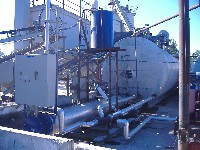
A Hot Solution – F & R Asphalt beats fuel prices by adding an electric heater to its asphalt plant
When fuel prices skyrocketed in the summer of 2008, many asphalt plants were scrambling for a solution to keep down diesel costs. F & R Asphalt, headquarted in Easley, SC, found one solution that did just that. F & R Asphalt produces between 500,000 and 800,000 tons of mix a year; the majority is used for DOT projects with some for commercial uses. In the summer of 2008, when diesel costs were running toward $4 a gallon, F & R decided to add a Process Heating Co. (PHCo) electric hot oil heater at its Gray Court, SC facility, which produces about 200,000 tons of asphalt annually. "We replumbed the unit ourselves," says Chris Faucett, plant operator with F & R. "It wasn't a difficult installation; it probably took about three days." adding the electric heater to the tanks when fuel prices were so high cut the cost to heat the asphalt nearly in half, says Faucett. Rick Jay, president of PHCo, runs the numbers for an average plant: "fairly common size drum mix asphalt plant will require a 140kW heater," he explains. "This is adequate for two 30,000-gallon asphalt tanks and associated jacketed pumps, meters and asphalt lines. "For an asphalt plant using 75 gallons/day in the summer and 100 gallons/day in the winter — with diesel at a cost of $3.70, like it was in the summer of 2008 — the fuel cost would be $277/day in summer and $370/day in winter. "The electric cost is about $0.11/KW — which is typical, and even lower rates can be achieved using off peak hours and by controlling demand — so with a 140kW heater running around 4 hours/day (summer) and 6 hours/day (winter), the electric cost would be $62/day (summer) and $92/day (winter)."
Best of both worlds at F & R, the plant still maintains its diesel-fired heater as well as the electric, so the plant can switch back and forth between the two, depending on which system will reap the most cost savings. "We have both heaters in place," says Faucett. "We installed the electric when fuel was nearly $4 a gallon. But we have the option to go back to the electric if fuel prices start creeping up again." F & R has installed a second electric heater at its Easley plant, which was just getting ready to go on line at this printing. Faucett has high expectations for the heater. "I feel it will have similar results," he says. "Our Gray's Court unit has been running for six months and we've had no problems. An electric heater is more dependable and there's definitely less maintenance than with a diesel-fired system."